
From Financial Stewardship to Strategic Leadership: The CFO and the Future University
Higher Education is operating in a financial environment in which many of the assumptions that once underpinned institutional planning have become increasingly uncertain. Student recruitment is more volatile. Costs remain under pressure. Universities need to continue investing in people, technology, estates and academic capability while protecting the student experience and research mission. At the same time, institutions are being asked to demonstrate greater financial resilience and make increasingly difficult choices about where scarce resources should be deployed. The Office for Students’ May 2026 assessment found that, while the English sector’s aggregate financial performance had improved slightly in 2024-25, universities’ forecasts for future recovery remained heavily dependent on significant growth in student recruitment. It also observed that much financial risk management remained predominantly short-term. This is not simply a challenge for university finance functions. It changes the strategic importance of the Chief Financial Officer. The modern Higher Education CFO cannot simply tell the institution what it can afford. They increasingly need to help the institution decide what it should choose to afford. From financial control to strategic choice Financial stewardship remains fundamental. Universities need strong financial controls, accurate reporting, effective treasury management, robust forecasting and appropriate oversight of investment and expenditure. But these are increasingly the foundations of the CFO role rather than its limits. The bigger challenge is helping institutional leaders translate financial information into strategic choices. Recent work by PwC, Universities UK and Lloyds Banking Group highlights the importance of stronger financial governance and financial acumen across universities. Only 47% of roundtable participants felt that financial reporting in their institution actively influenced priorities and trade-offs, while only 25% said that information available to decision-makers was clear, timely and supported informed challenge. A university can have accurate financial information without necessarily having decision-useful financial insight. The strategic CFO therefore needs to help leaders ask: These are not simply finance questions. They are questions about institutional strategy. Moving beyond the annual budget Universities understandably devote considerable energy to annual budgeting. But one of the risks in a financially constrained environment is that the budget becomes the strategy. When this happens, institutions can become focused on achieving a particular year’s financial target rather than making the structural choices required for long-term sustainability. The Office for Students has highlighted this tension, identifying increasing action by providers on cost reduction and income diversification while noting that much financial risk management remains short-term. A balanced budget next year does not necessarily mean the institution has a sustainable operating model. Equally, carefully planned investment or restructuring costs today may be necessary to create a financially stronger organisation tomorrow. Financial sustainability should therefore be understood not simply as balancing income and expenditure, but as ensuring that the university’s strategy and operating model are economically viable over the long term. From cost-cutting to understanding value Cost reduction may be necessary, but not every saving creates value. Removing expenditure without understanding the activity it supports can reduce institutional capability, weaken services or create additional costs elsewhere. For CFOs, this means developing a much more sophisticated understanding of cost, contribution and value. The 2026 PwC work on financial acumen specifically highlights the importance of understanding the cost and contribution of different activities and having trusted information that can inform institutional choices. This should allow the conversation to move from “Where can we cut?” towards: “Where should we invest, reduce, redesign, collaborate, grow or stop?” That is a fundamentally different role for Finance. It moves the function from controlling expenditure to helping allocate scarce resources towards the activities that matter most. Challenging optimism and improving forecasting Universities operate in a sector where forecasts depend heavily on assumptions about student recruitment, international demand, research income, inflation, staffing and other factors that may change rapidly. The Office for Students’ 2026 assessment cautions that anticipated sector recovery relies heavily on projected recruitment growth. In this environment, forecasting should not mean producing one confident version of the future. It should mean understanding multiple plausible futures. The strategic CFO can strengthen decision-making through scenario modelling, sensitivity analysis and stress testing: The purpose is not to produce increasingly pessimistic forecasts. It is to ensure that strategy remains resilient when reality inevitably differs from plan. Investment during financial constraint Perhaps one of the hardest challenges facing CFOs is that transformation itself costs money. Universities need to invest in AI and digital capability, cyber resilience, new skills, organisational redesign, estates rationalisation and sustainability precisely when financial capacity is constrained. This creates a tension between affordability today and capability tomorrow. The strongest CFOs will therefore need to resist two equally problematic positions: assuming every transformation programme represents worthwhile investment, or assuming expenditure reduction is automatically prudent. Instead, the CFO needs to ask: That final question matters because failing to modernise can itself create significant financial risk. The CFO as an investor in transformation The CFO should increasingly think like an institutional investor. Universities have finite financial capacity. Every pound committed to one priority is, implicitly, unavailable for another. Capital allocation therefore becomes one of the institution’s most important strategic processes. Investments in technology, people, estates, academic portfolios and partnerships should not be viewed as independent business cases competing for approval. They should form part of a coherent portfolio of institutional choices. The question should not simply be whether an individual investment produces a positive return, but whether it is the best use of the university’s limited capacity to invest. Collaboration changes the financial model The financial challenge may also require universities to rethink what they provide themselves. The Universities UK Transformation and Efficiency Taskforce has advocated greater collaboration, shared services and shared infrastructure, alongside digital transformation, benchmarking and new collaborative structures. This introduces a different type of CFO conversation. Instead of asking “How much will it cost us to provide this?”, institutions may increasingly need to ask: “What is the most effective economic model for accessing this capability?” That could mean owning, buying, partnering, sharing or stopping. The CFO can provide the commercial analysis necessary to understand those choices
Why fractional leadership is about more than filling a gap
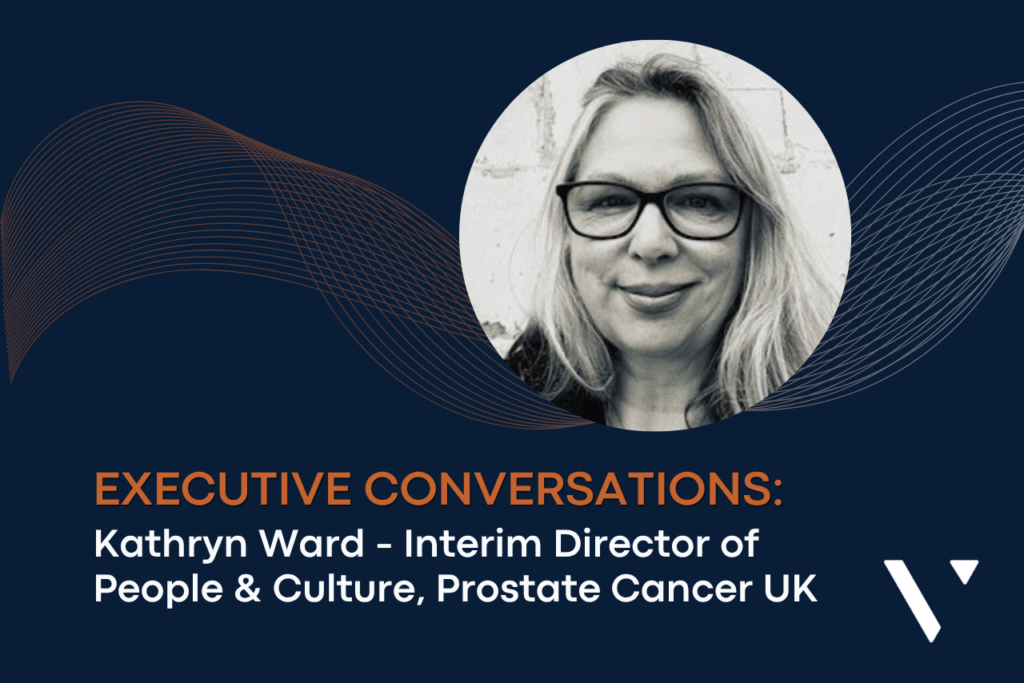
As more organisations look for senior expertise without the cost and rigidity of a full-time executive, fractional and interim leadership is becoming an increasingly powerful option – especially in the charity sector. In this conversation, Simon Pickerell talks with Kathryn Ward, an experienced Chief People Officer and fractional leader, about why she chose this path, how she protects her energy, and what organisations need to know before bringing in a fractional executive. What first drew you to fractional and interim work rather than a single permanent role? I’ve enjoyed my permanent leadership roles, but I reached a point where I wanted to have a broader impact. Many organisations don’t need a full-time strategic HR leader, but they do need senior people expertise. Fractional leadership allows me to work alongside executive teams and boards on the strategic questions – how people enable organisational strategy, how leadership evolves, and how organisations build capability – while supporting multiple charities rather than just one. What appealed to me wasn’t consultancy alone; it was becoming part of the leadership journey. Building long-term relationships, helping organisations develop their own capability, and contributing where I can make the greatest difference. Outside of work, what’s something you do that actually makes you a better leader when you’re back in the room? It might sound slightly clichéd, but yoga. More broadly though, it’s about creating space. Whether that’s yoga, reading, listening to a podcast or simply switching off for a while; making space helps me stay grounded. Leadership constantly brings competing priorities, emotion and uncertainty. If you know where your own centre is, you can empathise with what’s happening around you without being pulled off balance yourself. That gives you the headspace to make good decisions rather than reactive ones. It also keeps you connected to your values. Whether that’s through journaling, coaching, meditation or other reflective practices, understanding what matters to you makes you a clearer, more consistent leader. What’s a piece of advice, professional or personal, that’s stuck with you throughout your career? There are two. The first came when I stepped into my role at Guide Dogs and everything felt bigger than I’d anticipated. A coach said to me: “It can be hard, and you can still be doing a good job.” I’ve never forgotten that. Stepping into a bigger leadership role should feel challenging. Just because something is hard doesn’t mean it’s wrong, or that you’re not the right person for it. The second is: “If not you, then who?” Sometimes that’s about delegation – recognising you can’t do everything yourself. Other times it’s about having the courage to speak up when you see something that needs saying. Both are reminders of what leadership really requires. They’re still written on sticky notes next to my computer today. How do you protect your own energy and wellbeing while working across multiple demanding roles? The first thing is knowing whether this style of work genuinely suits you. I get energy from variety. Moving between different organisations, challenges and groups of people keeps me engaged, but that’s not true for everyone. If variety drains you rather than energises you, this probably isn’t the right model. Beyond that, it’s about understanding your own energy. I know when I’m at my best for one-to-one conversations, when I’m better facilitating larger groups, and how much energy different clients and different types of work require. I structure my diary around that wherever I can. I also build in transition points. That might be going for a walk, listening to music or simply stepping away from my desk. Sometimes, when you work from home, you even need to create your own commute – walk out of the front door and back in again if that’s what helps you mentally switch between roles. It’s about understanding what allows you to show up well, wherever you’re working. When you walk into a new organisation for the first time, what’s the one thing you assess in the first week that tells you what the real priorities are? Consistency. In those first couple of weeks, I’ll speak to people right across the organisation. What I’m listening for isn’t whether everyone uses exactly the same words – it’s whether they’re telling broadly the same story. If senior leaders, middle managers and frontline teams all describe the culture and strategy in a broadly consistent way, you’ve got something to work with, even if that culture isn’t perfect. Where the stories differ dramatically, that’s usually where the real work begins. Those inconsistencies often point to issues around communication, leadership alignment or culture, and understanding those gaps tells you a great deal about what the organisation really needs. What’s a piece of work or a turnaround you’re proudest of that you couldn’t have achieved in a traditional, permanent role? One of the biggest advantages of coming into an organisation as a fractional or interim leader is bringing fresh perspective. When you’re already part of the system, it’s naturally harder to question how that system works. Coming in from outside gives you permission to ask different questions about leadership structures, organisational design and how functions work together. You’re also able to bring insight from other organisations and benchmark what’s happening elsewhere. Sometimes the greatest value isn’t having all the answers – it’s helping leadership teams ask questions they hadn’t considered before. That’s something I really enjoy about this way of working. What’s the biggest misconception organisations have about hiring a fractional or interim executive? One of the biggest misconceptions is that they don’t need one because someone is already “doing” that role. There’s a real difference between someone delivering the day-to-day function and someone providing strategic leadership. Whether it’s people, finance, digital or AI, organisations often stretch existing teams rather than stepping back and asking what expertise they actually need. Another challenge is that decisions are often made informally – someone knows someone who can help. Fractional leadership works best when organisations take a more strategic approach, defining the capability they
JOIN OUR LIVE PANEL DISCUSSION: Leading Transformation at Pace
The New Operating Model of Public Sector Leadership

Every executive search gives us a window into how organisations are changing. Over the past year, we’ve seen a noticeable increase in organisations redesigning executive teams before they come to market. New leadership portfolios are emerging across central government, higher education, transport, infrastructure and arm’s-length bodies, with growing demand for Deputy Chief Executives, Chief Operating Officers, Chief Transformation Officers and Executive Directors of Delivery. These appointments reflect a broader evolution in public sector leadership. Executive teams are being configured around transformation, programme delivery, digital capability, commercial leadership and organisational performance, alongside their more traditional responsibilities. It’s a trend we’ve been watching closely because executive structures often reveal where organisations believe their biggest challenges – and opportunities – lie. From strategy to delivery Much has been written about the scale of change facing the public sector, but less attention has been given to what that means for executive leadership. Across our markets, organisations are balancing long-term transformation with the demands of day-to-day delivery. Universities are responding to financial sustainability and changing student expectations. Government departments and ALBs are delivering increasingly complex policy programmes. Transport and infrastructure organisations are managing major investment alongside operational performance, regulatory requirements and decarbonisation. Defence organisations are scaling capability at pace while responding to a rapidly changing geopolitical landscape. The common denominator is delivery. Many of these priorities sit alongside one another rather than replacing each other. As a result, organisations are creating executive capacity in areas that have become strategically critical. Executive portfolios are evolving Titles differ from one organisation to another, but the underlying themes are remarkably consistent. We’re seeing greater demand for executives responsible for transformation, organisational performance, programme delivery, digital, commercial operations and cross-functional change. In some organisations, these responsibilities sit with a Deputy Chief Executive or Chief Operating Officer. Elsewhere, they’re reflected in newly created Chief Transformation Officer positions or Executive Directors with responsibility for strategy and delivery. These roles rarely exist in isolation. They are designed to coordinate programmes that cut across organisational boundaries, align multiple stakeholders and maintain momentum over several years. That’s a very different remit from the operational leadership portfolios many of these roles would have carried even five years ago. Organisation design is becoming part of the leadership conversation One of the more interesting developments is that conversations increasingly begin with executive structure rather than individual appointments. Boards and Chief Executives are asking whether existing portfolios reflect the organisation’s priorities, whether executive capacity is aligned to future delivery requirements, and whether responsibilities should be redistributed before recruitment begins. For some organisations, that means creating entirely new executive roles. For others, it means redefining existing portfolios or bringing in interim leadership to establish new functions before making permanent appointments. Executive search is becoming one part of a much broader discussion about leadership capability. Looking ahead Executive structures have always evolved in response to changing priorities. Today’s priorities include digital transformation, AI adoption, financial sustainability, infrastructure investment, organisational reform and increasingly complex stakeholder environments. They demand executive leadership with the time, experience and authority to drive delivery at scale. We expect this trend to continue as organisations continue to adapt to new policy, funding and operational challenges. The titles may differ, but the direction of travel is becoming increasingly clear. Public sector organisations are reshaping executive leadership around the capabilities required to deliver long-term transformation, not simply to manage today’s organisation. Get in touch to discuss your leadership requirements.
Veredus appointed to the Government Commercial Agency’s RM6394 framework

Veredus is pleased to announce its appointment to the Government Commercial Agency’s Executive & Non-Executive Search 3 Framework (RM6394), providing public sector organisations with a compliant and efficient route to access our Executive Search, Interim Management and Leadership Advisory services. The framework has been designed to simplify the procurement of senior leadership solutions, enabling organisations to engage pre-qualified suppliers through an established commercial route. By reducing procurement timescales and administrative complexity, RM6394 allows organisations to focus on what matters most – securing the leadership capability needed to deliver organisational priorities. Supporting leadership across the public sector For decades, Veredus has partnered with organisations across central government and the wider public sector, supporting critical leadership appointments and organisational transformation. Our appointment to RM6394 reflects that experience and provides clients with access to a broad range of leadership solutions through a single framework. Executive Search Every executive appointment presents different challenges, governance requirements and stakeholder expectations. Our modular Executive Search methodology enables organisations to access the level of support appropriate to each assignment, whether that’s executive market mapping, leadership assessment, candidate benchmarking or a fully retained executive search campaign. This proportionate approach ensures every appointment is aligned to organisational priorities while maintaining the governance and assurance expected through RM6394. Interim Management Leadership requirements don’t always follow a permanent recruitment timetable. Periods of transformation, machinery of government change, financial recovery and major programme delivery often require experienced executive capacity at pace. Through RM6394, organisations can access Veredus’ network of senior interim leaders with extensive experience across government and the wider public sector, providing immediate capability to maintain momentum and strengthen delivery. Leadership Advisory Executive Search is increasingly just one part of effective leadership planning. Leadership Advisory enables organisations to define future leadership requirements before recruitment begins, supporting organisational design, succession planning, executive assessment, leadership capability and board effectiveness. By combining public sector insight, market intelligence and leadership assessment, we help organisations make informed leadership decisions that support long-term organisational objectives. A strategic partner for public sector leadership The challenges facing public sector organisations continue to evolve. Financial pressures, workforce reform, transformation programmes and increasing public scrutiny mean leadership decisions have never been more significant. RM6394 provides a trusted and compliant framework through which organisations can access the expertise required to address those challenges. Whether the requirement is Executive Search, Interim Management or Leadership Advisory, Veredus brings extensive public sector experience, independent judgement and a collaborative approach to every engagement. If you’d like to discuss how RM6394 can support your organisation’s leadership requirements, we’d be delighted to start the conversation. DOWNLOAD THE FRAMEWORK BROCHURE HERE.