
Defence Investment Plan: Sovereignty will be built in the supply chain
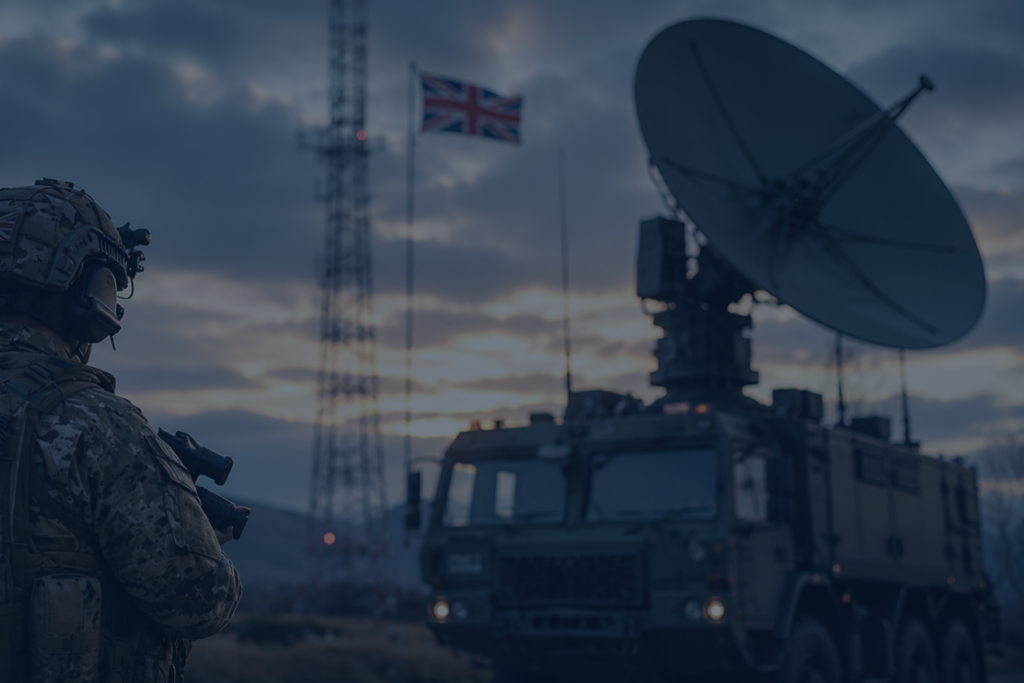
Words by Gareth Wood, Defence Director The Defence Investment Plan should not be read simply as another spending announcement. The real test will be whether it helps Britain rebuild the industrial depth, sovereign capability and manufacturing resilience needed to compete in a more dangerous world. The headline numbers are significant. The Government has set out £298 billion of defence investment over the next four years, including an additional £15 billion through the Defence Investment Plan, while taking core NATO defence spending to 2.7% of GDP from 2027/28. But the more important question is not only how much is being spent, but where that money lands. The Government’s language around the plan was deliberately industrial. The message was to “back British”, with defence spending used wherever possible to support British workers, businesses and innovators. He also spoke directly about bringing SMEs and start-ups into defence supply chains, ensuring the economic benefit is felt across regions and communities, not simply captured by the traditional prime contractors. That matters because modern defence capability is no longer built by a small number of major platforms alone. The conflicts of today and tomorrow depend on drones, autonomy, AI, cyber, sensors, counter-drone systems, software, secure communications, advanced manufacturing and rapid production capacity. These are areas where smaller, specialist and high-growth businesses can be decisive. But sovereign capability cannot exist only at the top of the supply chain. It depends on the depth beneath it: the specialist manufacturers, component suppliers, software firms, materials businesses, testing facilities and engineering teams that allow capability to be produced, upgraded and replenished at scale. This is the central challenge. Britain may have world-class innovators, but if those firms cannot access contracts, finance, facilities, production partners or qualification routes, innovation risks remaining trapped at prototype stage. The real test of the DIP will be whether it helps create a supply chain that can not only invent, but manufacture, certify, deliver and sustain capability at pace. There is another constraint that receives far less attention than funding or procurement: capability. Defence, nuclear and advanced manufacturing are all competing for the same engineers, commercial specialists and transformational leaders needed to deliver growth. As investment accelerates, the organisations that succeed will not necessarily be those with the largest budgets, but those that can attract, develop and retain the talent required to turn investment into delivery. The UK’s sovereign capability challenge is therefore not only industrial, it is also a leadership and workforce challenge. For British SMEs, the opportunity is clear, but so is the challenge. Many already have the technical expertise, agility and ambition that defence needs. What they often lack is predictable demand, simplified procurement, patient capital and the manufacturing infrastructure to move from concept to volume production. That is why the Defence Office for Small Business Growth matters. A clearer front door into defence is welcome, as is the commitment to increase MOD spending with SMEs. But access alone is not enough. If Britain wants sovereign capability, it must help SMEs scale. That means clearer demand signals, faster procurement, better qualification routes, investment in facilities and a willingness to bring innovative firms into major programmes earlier. It also means primes working differently with smaller businesses, not simply treating them as peripheral suppliers, but as essential partners in national resilience. Or it requires SMEs to work and unify differently as a collective, taking control via collaboration, to challenge the programme delivery status quo. The lesson from Ukraine has been clear. Capability advantage is no longer only about having the most exquisite platform. It is about speed, adaptability, resilience and the ability to replenish. It is about whether a nation can surge production when the strategic environment changes. Yet perhaps the biggest risk to this delivery is neither funding nor intent. It is execution. Across defence, nuclear and advanced manufacturing, organisations are increasingly be forced to compete for a limited pool of experienced leaders capable of delivering complex programmes, scaling industrial operations and managing highly regulated environments. As investment increases, the ability to attract the right Technical and operational leadership may become as important as access to capital itself. A sovereign capability strategy ultimately depends on having the people capable of turning policy into outcomes and investment into delivery. The Defence Investment Plan sets the direction. The supply chain, its leadership and its people will determine whether Britain can deliver. Veredus partners with organisations across defence, aerospace, nuclear and critical infrastructure to identify and secure the leadership and specialist talent that enables complex programmes, industrial growth and long-term capability development. To discuss your leadership requirements, please contact gareth.wood@veredus.co.uk
The next challenge for bus franchising

Peter Keegan, Director of Transport, shares his perspective on the next phase of bus franchising. The bus market itself has changed. Hybrid working has reduced commuter peaks, while discretionary travel – retail, leisure, health – has become more important. This requires a rethink of network design, moving away from radial, peak-driven services toward more flexible, all-day connectivity. Franchising enables this shift, but does not guarantee it. Authorities must be bold enough to redesign networks around emerging travel patterns, rather than simply preserving legacy routes. Growth will come not from restoring the past, but from attracting new users through simplicity, reliability, and relevance. The Operator Question Franchising reshapes the role of operators – from market-driven decision-makers to contracted service providers. This creates opportunities for standardisation and performance management, but also raises questions about market health. A smaller number of larger contracts can concentrate risk and potentially limit competition. At the same time, ensuring space for SMEs and fostering innovation within a more controlled system requires deliberate contract design. The future model must balance efficiency with diversity, and discipline with partnership. Decarbonisation Without Decline The UK’s net zero ambitions place buses at the centre of the transition to sustainable transport. Yet the shift to zero-emission fleets introduces significant capital and operational pressures. Infrastructure, grid capacity, and vehicle costs all require long-term investment. The leadership challenge is to ensure that decarbonisation enhances, rather than constrains, the network. A green bus system that is less frequent or less accessible will struggle to deliver mode shift. Franchising provides the framework to align environmental and service goals – but only if funding and planning are integrated. Managing Expectations in a Political Cycle Franchising is a long-term reform operating within short-term political cycles. Public expectations for visible improvements are high, yet the benefits – ridership growth, behavioural change, network optimisation – take time to materialise. This creates a critical leadership task: setting realistic expectations while maintaining momentum. Transparent performance metrics, clear narratives of progress, and early “quick wins” (such as fare simplification or branding) will be essential to sustaining public confidence. Beyond the Model: A System Mindset Ultimately, the future of UK buses will not be defined by franchising alone, but by the system thinking that surrounds it. Integration with rail, active travel, housing, and economic development is where the real value lies. Buses must be positioned not as a residual mode, but as the backbone of place-based transport strategies. Franchising makes this possible – but does not make it inevitable. The Strategic Imperative The UK now has a window of opportunity. With multiple city regions moving toward franchising, there is the potential to reset the role of buses in national life: from fragmented safety net to integrated, high-quality public service. Realising this vision will require three things: Franchising is not the end of reform – it is the beginning of responsibility. The next phase will determine whether the UK simply changes how buses are governed, or fundamentally transforms how they are used. To discuss your leadership requirements, contact peter.keegan@veredus.co.uk
Executive Conversations: Belinda Phipps on Leadership Under Pressure
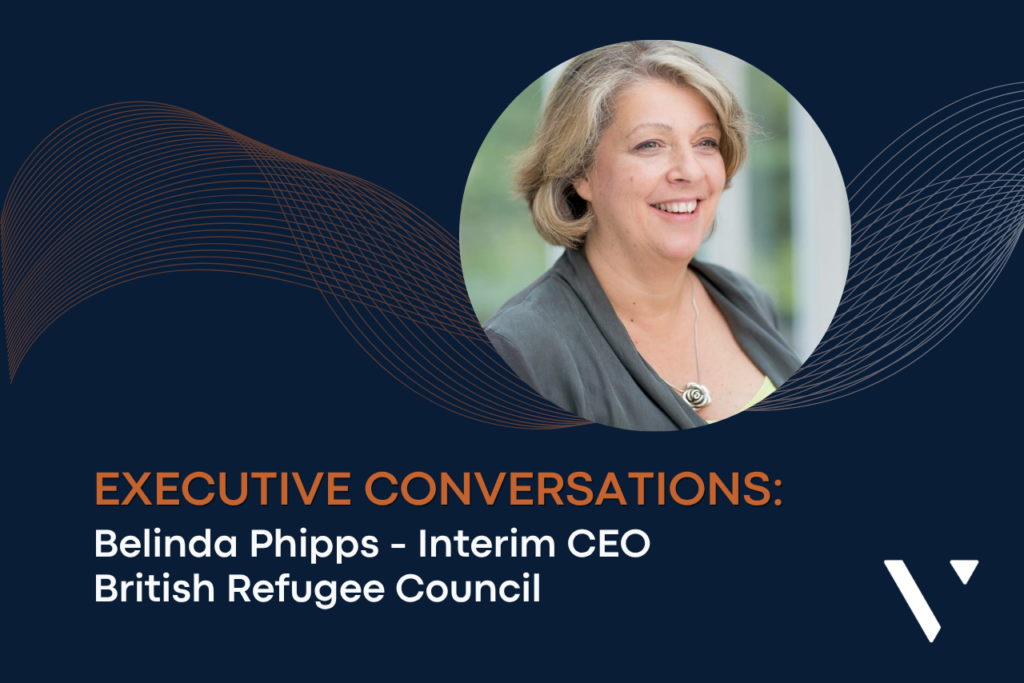
What does it really take to lead when the consequences of failure are significant, uncertainty is constant, and every decision carries weight? In this edition of Leadership Conversations, Simon Pickerell speaks with Belinda Phipps, Interim Chief Executive of the British Refugee Council, about the realities of leading complex organisations through periods of significant change. Drawing on a career spanning healthcare, the public sector and the charity sector, Belinda reflects on the experiences that have shaped her leadership approach, from her first chief executive role in the NHS to leading transformation in organisations facing financial, operational and societal pressures. Together, they explore what creates a genuine burning platform for change, how to build momentum in the face of scepticism, why the most effective leaders focus on solving dilemmas rather than accepting compromise, and the personal resilience required to lead when the stakes are high. — 1. What first drew you to transformation work? Was there a defining moment early in your career? Early in my career, the defining moment came when I took on my first chief executive role, leading the regional Blood Transfusion Service for the South East. I arrived feeling proud and excited, and like any new CEO, I went out to see how things worked on the ground. On only my second or third day, I visited the team that takes orders from hospitals for blood products. I stood and listened as call handlers repeatedly told hospitals they couldn’t have what they were asking for, effectively negotiating and arguing over orders. In my naivety, I asked what would happen if we didn’t deliver the blood. The answer was that operations would be delayed or cancelled. Then I asked, “What happens if it’s an emergency?” There was a deathly silence. The unspoken truth was that the patient might not get the blood they needed and might not survive. That was a chill‑down‑the‑spine moment. I suddenly understood that I was responsible for an organisation that could, in effect, be contributing to people dying if it failed. I had to ask myself, “Do I really want to do this?” Because if I stayed, then I had to fix it. Fresh from an MBA, I decided to radically change how the service operated so it could reliably provide the blood required. My initial toolkit wasn’t enough, so I went back for more help and brought in a different methodology. Within about 18 months, we had enough blood not only for our own region but also to support other centres, and we stopped missing orders. The transformation changed everything. We went from the fear of failing patients to the pride of staff who were genuinely delighted with what they were achieving and hungry to improve further. That success helped drive a national merger of the separate blood services, so the same approach could be rolled out everywhere. Seeing that kind of turnaround, the impact on patients and the pride in staff, can be almost addictive. That experience was my entry point into real transformation work 2. What was the real burning platform that convinced you this transformation was non‑negotiable? In the blood service, the burning platform was stark: you cannot be killing people. If the organisation fails to deliver blood when it’s needed, you are putting lives at risk. In that situation, transformation isn’t a strategic option—it’s an ethical necessity. Continuing as you are simply isn’t morally defensible. In other transformations I’ve led, the burning platform has often been financial and existential. Organisations reach a point where their financial sustainability, and therefore their future, is in serious doubt. By the time I’m asked to step in, most of the incremental fixes have already been tried. So the burning platform often sounds like: “We’re running out of options. If we carry on like this, we may not survive.” At that point, a significant transformation, not just marginal change, is non‑negotiable. 3. What has been the most difficult trade‑off you’ve had to make in a transformation so far? I’m actually not a great believer in trade‑offs as they’re commonly framed. “Trade‑off” often becomes a respectable word for “we’ve decided to compromise,” and that can be a sign we haven’t done enough deep thinking. Take the NHS as an example. The system constantly wrestles with three pressures: The typical response is to “balance” these, focus on one at the expense of the others, then shift back again. You end up institutionalising a permanent sense of compromise. Whenever I’m told, “This is a trade‑off,” I try to treat it instead as a dilemma to be solved. I ask: how can we improve quality and quantity of service, and be financially sustainable at the same time? It’s not that everything is easy or that you never make hard calls, but often, when you really apply yourself to the problem, you can find creative win‑win solutions instead of living forever with unhappy compromises. The real work of transformation is less about tolerating trade‑offs and more about resolving long‑standing dilemmas that people have assumed are unfixable. 4. How do you bring sceptics and “fence sitters” in the organisation along on the journey? At the beginning, I don’t. Every organisation has three groups: If you start by focusing on sceptics and fence sitters, you burn a lot of time and emotional energy for very little progress. So early on, I focus on finding and working with the willing. I have a lot of individual conversations to identify those who really want to give change a go. I then work closely with them to build momentum and deliver visible progress. Once things are moving and good things start to happen, the dynamics change: In short, I lead with the willing, let success become the persuader, and allow sceptics to make their own decisions once the direction of travel is obvious. 5. Can you share a moment when a transformation nearly went off the rails, and what you did about it? When a transformation feels like it’s going off the rails, my first move is to look in the mirror. In my experience, things often wobble when: Transformations are emotionally intense. They involve high stakes, conflict, and
Britain’s Drone Moment: Turning Defence Ambition into Industrial Advantage

Words by Gareth Wood, Director of Defence. One of the most important lessons from recent conflict is not simply that UAVs matter. It is that speed now matters as much as scale. For decades, defence advantage was often measured in platforms, larger ships, more advanced aircraft, longer-range missiles, more sophisticated sensors. Those capabilities remain essential. But the UK’s Defence Investment Plan makes clear that the next phase of military advantage will also depend on something different: the ability to develop, manufacture, adapt and deploy autonomous systems at pace. The Government has committed more than £5 billion over the next four years to drones and autonomous systems, including strike and surveillance drones, uncrewed land vehicles and capabilities linked to a more hybrid force structure. This is not a marginal adjustment to the defence budget. It is a signal to industry that uncrewed systems are moving from the edge of defence thinking to its centre. That matters because drones change the economics of conflict. A relatively low-cost uncrewed system can find, track, disrupt or destroy equipment worth many times more. First-person-view drones, loitering munitions, autonomous surveillance platforms and electronic warfare payloads have all shown how quickly technology can alter battlefield assumptions. The result is not the end of traditional defence platforms, but the arrival of a more complex operating model: crewed and uncrewed systems working together, supported by data, autonomy and resilient communications. The technical direction is clear. Future UAVs will be increasingly modular, software-defined and mission-adaptable. One airframe may support multiple payloads: ISR, communications relay, electronic attack, target acquisition or logistics support. AI and computer vision will improve navigation, recognition and decision support. Edge processing will allow systems to operate when bandwidth is limited or communications are contested. Mesh networking will help platforms share information across dispersed formations. Swarming will create mass without requiring every system to be individually controlled.This is where the industrial challenge begins. The UAV market does not move at the tempo of traditional defence procurement. Platforms are adapted in months. Software is updated in weeks. Operational feedback loops are immediate. That means manufacturers need more than production capacity; they need engineering cultures built around rapid iteration, test, evaluation and continuous improvement.This is why Swindon is such an important development. The opening of Europe’s largest drone testing centre at the new DroneTEX facility in Swindon is significant not just because of its scale, but because of what it represents: the ability to develop and field drone capability in weeks, not years. Alongside this, TEKEVER’s investment in Swindon as its main European manufacturing facility shows how the UK can begin to build the industrial backbone needed to support sovereign uncrewed capability. In practical terms, this means bringing together disciplines that have too often been treated separately: aerospace engineering, robotics, embedded software, AI, secure communications, advanced manufacturing, cyber security, systems integration and operational delivery. It also means thinking differently about workforce capability. The winners in this market will not simply be those with the best technology. They will be the organisations that can scale without losing agility. They will need leaders who understand regulated defence environments but can still operate at commercial technology pace. They will need manufacturing teams comfortable with digital engineering, modular production, additive techniques, quality assurance and secure supply chains. They will need programme leaders who can connect technical ambition with operational reality. As Veredus’ recent work across UAV manufacturers and high-growth defence innovators has shown, the organisations best placed for this shift are those that combine technical excellence, leadership strength and manufacturing resilience. The Defence Investment Plan should therefore be read not just as a funding announcement, but as a strategic signal: industry now needs to innovate fast, scale smart and lead confidently through complexity. There is a wider opportunity here too. The technologies being developed for defence UAVs will shape civilian markets: infrastructure inspection, emergency response, offshore energy, environmental monitoring, logistics and border security. The dual-use potential is substantial. Done well, this could create not only stronger national security, but high-value employment, export opportunities and a more resilient British manufacturing base. The UK has the ingredients: engineering heritage, world-class research, innovative SMEs, serious defence customers and now a clearer investment signal. But ambition is not enough. If Britain wants to lead in autonomous defence systems, it must build the ecosystem around them: factories, testing facilities, supply chains, leadership capability and skilled people. Drones may be the visible technology. The real strategic advantage will come from the industrial system behind them. That is the opportunity now in front of us. — From our perspective at Veredus, these shifts are already shaping the conversations we’re having with clients across the defence sector. As organisations look to scale UAV capability and bring increasingly sophisticated autonomous technologies into operational service, the leadership challenge becomes every bit as important as the engineering one. We’re seeing growing demand for executives who can combine deep technical credibility with experience of manufacturing scale-up, complex programme delivery, defence procurement and organisational growth. As investment in uncrewed systems accelerates, identifying leaders with that blend of capabilities will be critical to turning strategic ambition into operational success.