
Words by Gareth Wood, Director of Defence.
One of the most important lessons from recent conflict is not simply that UAVs matter. It is that speed now matters as much as scale.
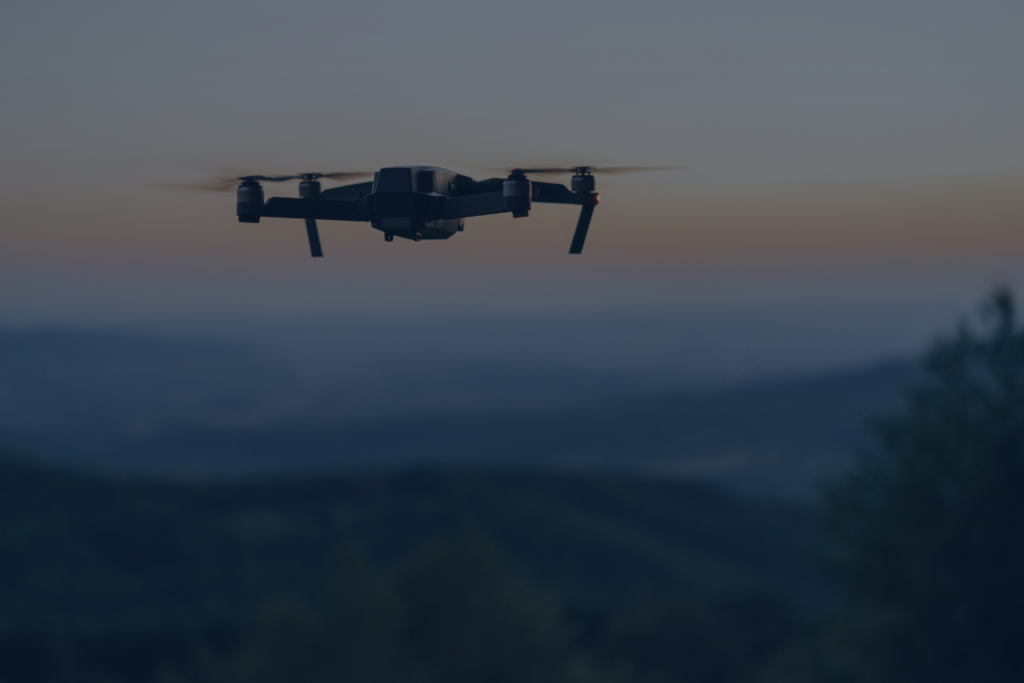
For decades, defence advantage was often measured in platforms, larger ships, more advanced aircraft, longer-range missiles, more sophisticated sensors. Those capabilities remain essential. But the UK’s Defence Investment Plan makes clear that the next phase of military advantage will also depend on something different: the ability to develop, manufacture, adapt and deploy autonomous systems at pace.
The Government has committed more than £5 billion over the next four years to drones and autonomous systems, including strike and surveillance drones, uncrewed land vehicles and capabilities linked to a more hybrid force structure. This is not a marginal adjustment to the defence budget. It is a signal to industry that uncrewed systems are moving from the edge of defence thinking to its centre.
That matters because drones change the economics of conflict.
A relatively low-cost uncrewed system can find, track, disrupt or destroy equipment worth many times more. First-person-view drones, loitering munitions, autonomous surveillance platforms and electronic warfare payloads have all shown how quickly technology can alter battlefield assumptions. The result is not the end of traditional defence platforms, but the arrival of a more complex operating model: crewed and uncrewed systems working together, supported by data, autonomy and resilient communications.
The technical direction is clear.
Future UAVs will be increasingly modular, software-defined and mission-adaptable. One airframe may support multiple payloads: ISR, communications relay, electronic attack, target acquisition or logistics support. AI and computer vision will improve navigation, recognition and decision support. Edge processing will allow systems to operate when bandwidth is limited or communications are contested. Mesh networking will help platforms share information across dispersed formations. Swarming will create mass without requiring every system to be individually controlled.
This is where the industrial challenge begins.
The UAV market does not move at the tempo of traditional defence procurement. Platforms are adapted in months. Software is updated in weeks. Operational feedback loops are immediate. That means manufacturers need more than production capacity; they need engineering cultures built around rapid iteration, test, evaluation and continuous improvement.
This is why Swindon is such an important development.
The opening of Europe’s largest drone testing centre at the new DroneTEX facility in Swindon is significant not just because of its scale, but because of what it represents: the ability to develop and field drone capability in weeks, not years. Alongside this, TEKEVER’s investment in Swindon as its main European manufacturing facility shows how the UK can begin to build the industrial backbone needed to support sovereign uncrewed capability.
In practical terms, this means bringing together disciplines that have too often been treated separately: aerospace engineering, robotics, embedded software, AI, secure communications, advanced manufacturing, cyber security, systems integration and operational delivery.
It also means thinking differently about workforce capability.
The winners in this market will not simply be those with the best technology. They will be the organisations that can scale without losing agility. They will need leaders who understand regulated defence environments but can still operate at commercial technology pace. They will need manufacturing teams comfortable with digital engineering, modular production, additive techniques, quality assurance and secure supply chains. They will need programme leaders who can connect technical ambition with operational reality.
As Veredus’ recent work across UAV manufacturers and high-growth defence innovators has shown, the organisations best placed for this shift are those that combine technical excellence, leadership strength and manufacturing resilience. The Defence Investment Plan should therefore be read not just as a funding announcement, but as a strategic signal: industry now needs to innovate fast, scale smart and lead confidently through complexity.
There is a wider opportunity here too.
The technologies being developed for defence UAVs will shape civilian markets: infrastructure inspection, emergency response, offshore energy, environmental monitoring, logistics and border security. The dual-use potential is substantial. Done well, this could create not only stronger national security, but high-value employment, export opportunities and a more resilient British manufacturing base.
The UK has the ingredients: engineering heritage, world-class research, innovative SMEs, serious defence customers and now a clearer investment signal.
But ambition is not enough. If Britain wants to lead in autonomous defence systems, it must build the ecosystem around them: factories, testing facilities, supply chains, leadership capability and skilled people. Drones may be the visible technology. The real strategic advantage will come from the industrial system behind them.
That is the opportunity now in front of us.
—
From our perspective at Veredus, these shifts are already shaping the conversations we’re having with clients across the defence sector. As organisations look to scale UAV capability and bring increasingly sophisticated autonomous technologies into operational service, the leadership challenge becomes every bit as important as the engineering one. We’re seeing growing demand for executives who can combine deep technical credibility with experience of manufacturing scale-up, complex programme delivery, defence procurement and organisational growth. As investment in uncrewed systems accelerates, identifying leaders with that blend of capabilities will be critical to turning strategic ambition into operational success.